How it works
How a water softener works
Hard water is common in borewell and groundwater supplies. Here is what causes it, what it does to your home, and how a softener fixes it.
Understanding hard water
Water becomes “hard” when it picks up dissolved calcium and magnesium as it passes through rock and soil. Hardness is measured in parts per million (ppm); water above roughly 200 ppm usually causes visible scale and soap problems.
The minerals are not usually harmful to drink, but when hard water is heated or evaporates they leave scale behind — on taps, tiles, geysers, pipes and the inside of appliances.
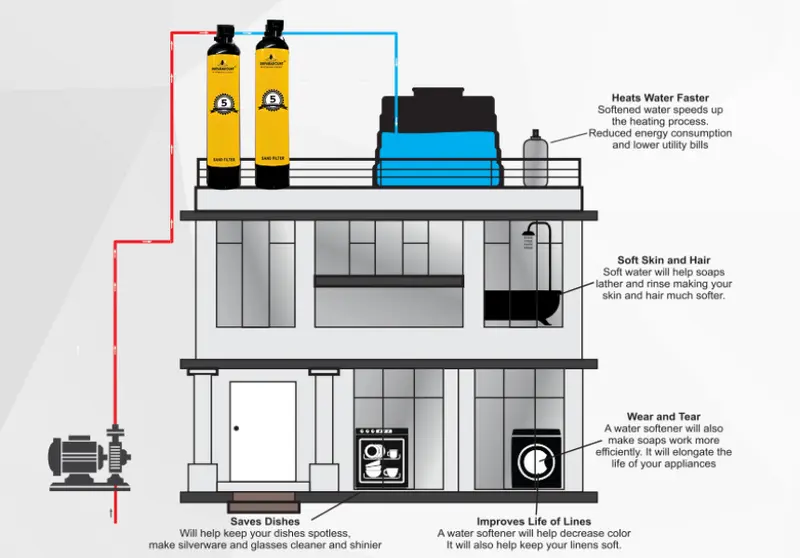
The ion-exchange process, step by step
Hard water enters
Water from your sump or borewell flows into the resin tank.
Resin captures minerals
Resin beads hold calcium and magnesium ions and release sodium ions in exchange.
Soft water flows out
Softened water goes to every tap, shower and appliance in the house.
Brine recharge
When the resin is saturated, a salt brine wash flushes the minerals away and the cycle starts again.
Problems caused by hard water
Poor lather
Soap and shampoo do not foam properly, so you use more and still feel less clean.
Dry skin and dull hair
Soap residue that will not rinse off can leave skin dry and itchy and hair rough.
Scaled geysers
Scale insulates heating elements, so geysers take longer and use more power.
Spotted vessels and tiles
White marks on steel vessels, glasses, taps and bathroom tiles.
Not sure which system you need?
We test your water on site and recommend the right softener or filter — no obligation.